


ATLANTA, GA – Today, Georgia Agriculture Commissioner Tyler J Harper is urging Georgia residents—particularly those in Bryan, Bulloch, Chatham, Effingham, and Liberty Counties—to be on the lookout for Yellow-legged Hornet (YLH) secondary nests as state officials continue efforts to control the spread of this invasive species.
“Georgia has made significant progress in tracking and eliminating the Yellow-legged Hornet, but our success depends on continued public support,” said Commissioner Tyler J Harper. “The sooner a nest is identified and reported, the sooner our team can respond. We are asking every Georgian to remain vigilant and help us keep this invasive species from gaining a foothold in our state.”
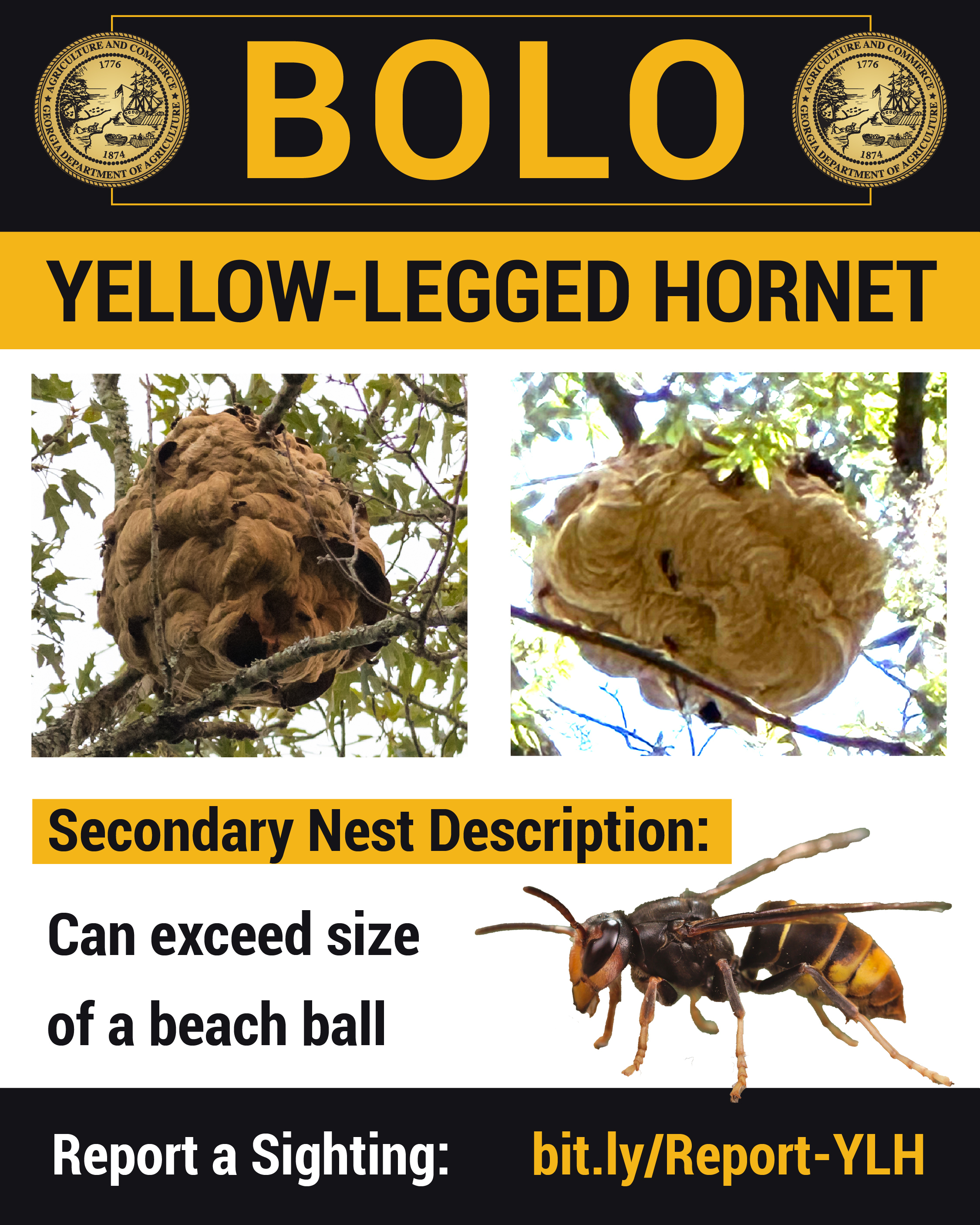
The Georgia Department of Agriculture’s Plant Protection Division has recently observed increased hawking activity around beehives, an indication that Yellow-legged Hornet colonies are entering their secondary nesting phase. Hawking occurs when the Hornets hover near honeybee hives and prey on foraging bees.
What Georgians Can Do:
- Watch for hawking activity around beehives, particularly during the morning hours (before noon) and after 5 p.m.
- Look for large, round or oval-shaped secondary nests high in trees or other elevated locations. Secondary nests are typically gray or brown and made of layered, paper-like material. Depending on temperatures, they may be visible from late summer through winter.
- If you believe you've discovered a Yellow-legged Hornet nest, do not attempt to remove it yourself. Instead, contact the Plant Protection Division at yellow.legged.hornet@agr.georgia.gov or a licensed pest management professional to ensure the queen is properly eradicated.
For more information about yellow-legged hornets, visit our website.
###