

The pasture mealybug (Heliococcus summervillei) primarily affects annual and perennial warm-season grasses. It was first confirmed in Decatur County, Georgia, by the USDA on August 5, 2026. To date, the pest has also been confirmed in Texas, Florida, and Louisiana. Infested plants may exhibit:
- Yellowing of leaves
- Stunted growth
- Premature senescence (early plant decline)
What Can You Do?
Good farm biosecurity is our best defense against pasture mealybug. Because these pests can spread on equipment, clothing, vehicles, and other materials, preventing their movement between fields and farms is critical.
Biosecurity practices include:
- Clean farm and hay equipment between fields or farms, as appropriate for your operation.
- Avoid driving through pastures whenever possible.
- Change clothing and footwear between fields or farms.
- Keep grazing records and avoid moving livestock into or through affected pastures.
- Limit wildlife movement through pastures when possible.
- Limit vehicle traffic on and off the farm.
Insecticides: At the time of this update, there are no labeled insecticides that provide reliable, complete control of pasture mealybug.
Identification
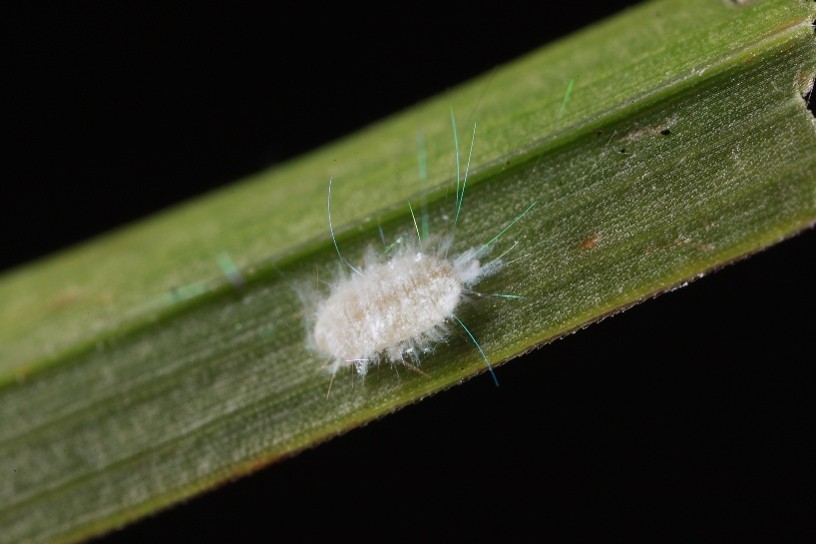
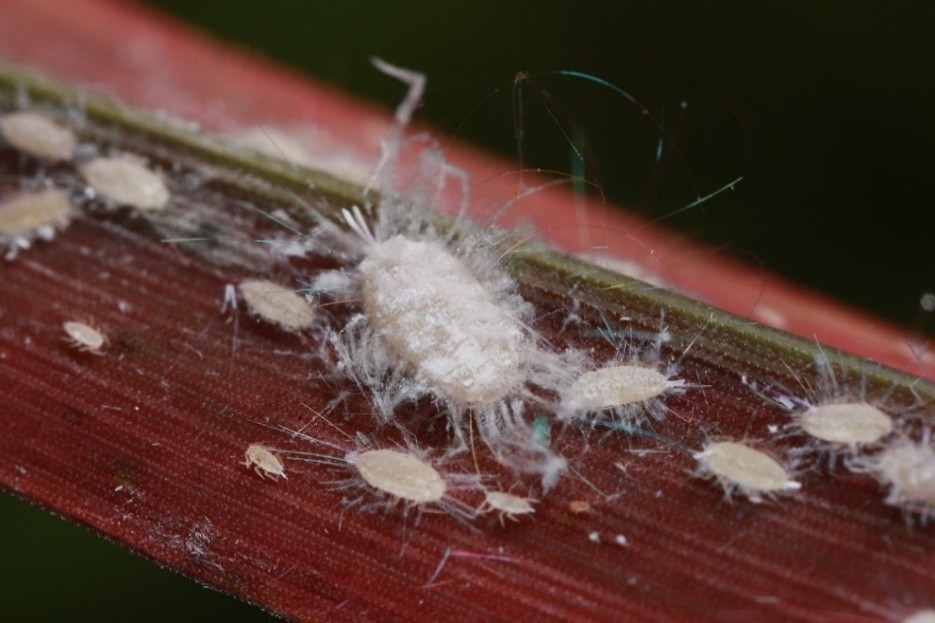
Adult pasture mealybugs are 2–5 mm long, oval-shaped, and covered in a white, waxy coating that gives them a “mealy” appearance. Older insects may have fine hairs extending from the body. Young nymphs are less than 1 mm and may require a magnifier to see.
Pasture mealybugs are often found at the base of plants, around roots, below the soil surface, or under dried cow patties. Nymphs are the primary damaging stage, while adults feed very little. They may occur individually or in groups and can be found on or below the soil surface and on plant leaves.
Damage and Symptoms
Immature pasture mealybugs damage grasses by sucking plant sap and injecting toxic saliva into the plant. They also produce honeydew, which can support sooty mold growth and reduce photosynthesis. Feeding weakens plants and can increase their susceptibility to secondary infections, including Fusarium.
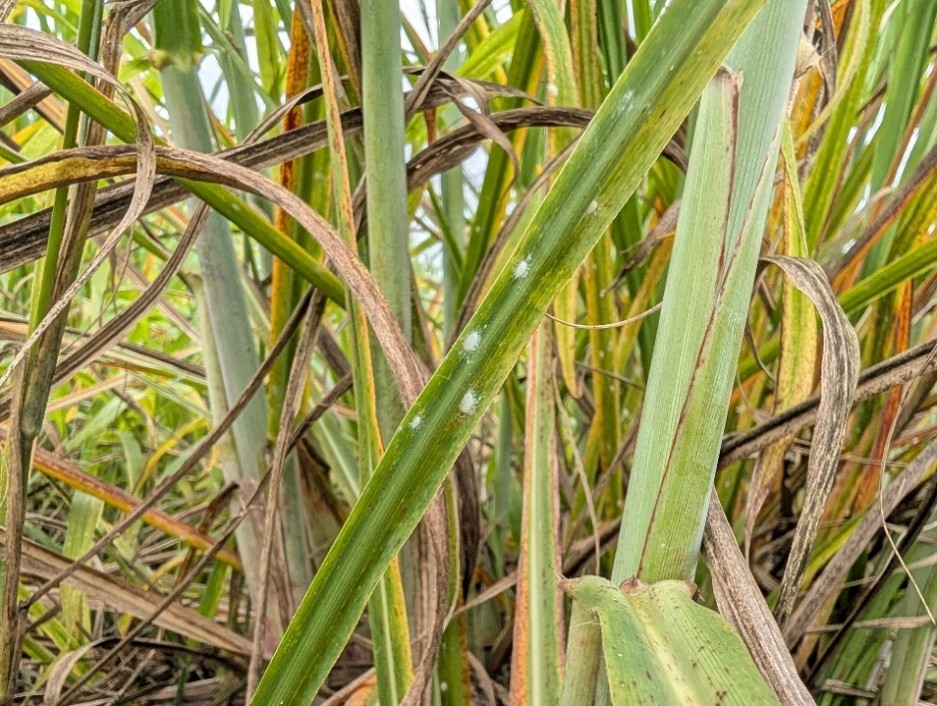
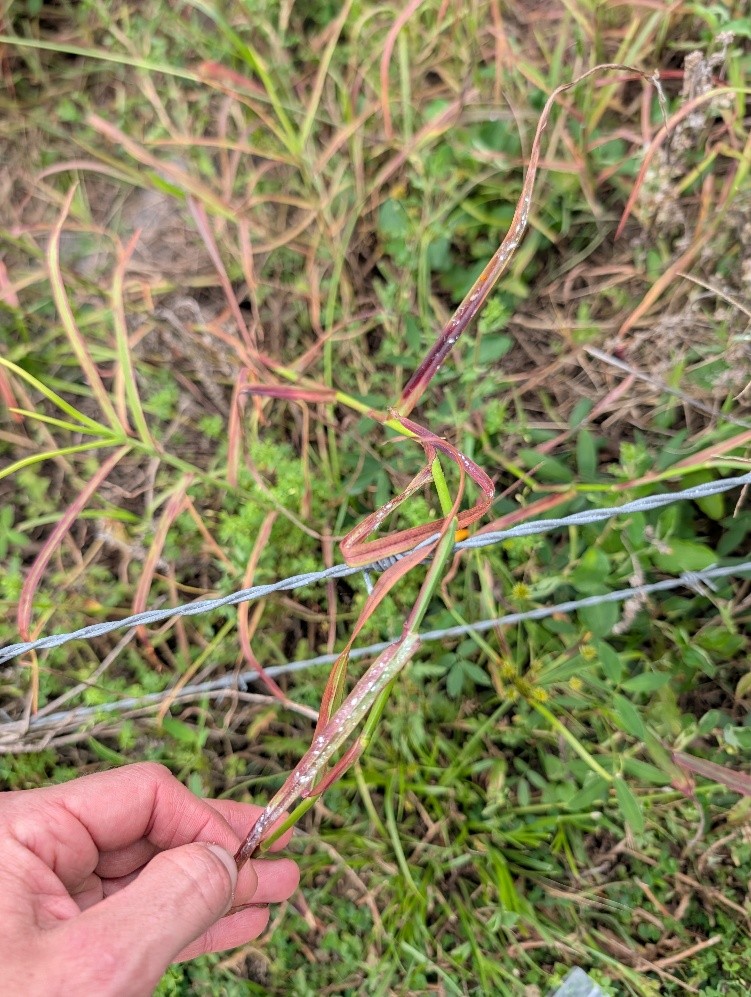
Symptoms may appear within a week of infestation and often include:
- Yellowing leaves, followed by purpling or reddening
- Stunted growth and drought-like stress, even after rainfall
- Poorly developed roots
- Dieback beginning at the tips of older leaves
- Premature senescence and plant death
Suspect Pasture Mealybug?
If you suspect pasture mealybug on your property, please contact your local County Extension Agent for assistance or complete the Suspected Cases of Pasture Mealybug (PMB) Survey.
The University of Georgia has created a map to help track confirmed pasture mealybug detections across the state. The map will be updated as new cases are identified and confirmed, providing the public with the latest information on the pest’s presence in Georgia.