
Curious about how pollinators support our world? Here are ten cool facts that might surprise you!
Georgia is home to hundreds of native bee species, including many solitary bees that nest in soil, wood, or plant stems.
Honeybees are not native to North America. They were brought to the continent by European settlers and are now an important part of Georgia agriculture.
Pollinators include more than bees. Butterflies, moths, beetles, flies, hummingbirds, and other wildlife also pollinate plants.
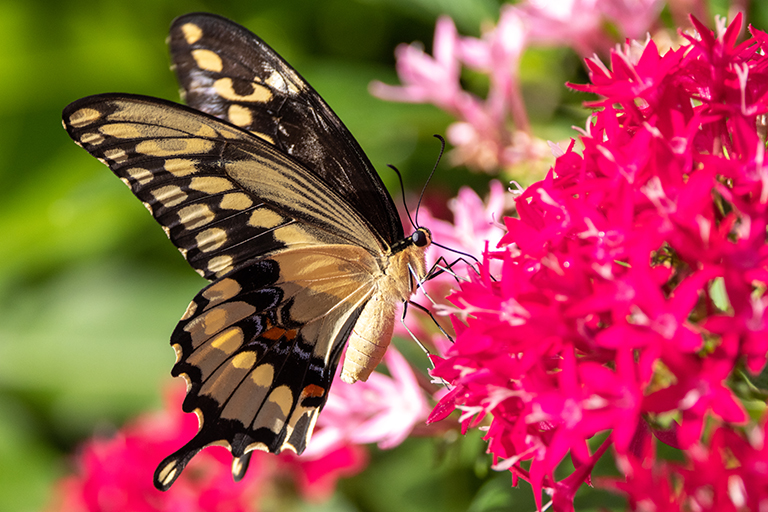
Georgia’s diverse landscapes support diverse pollinators, from the Blue Ridge Mountains to the Coastal Plain.
Many Georgia crops benefit from pollination, including fruits, vegetables, nuts, and seed crops.
Native plants provide important food and habitat for Georgia’s native pollinators.
Pollinators need food throughout the growing season. Planting species with different bloom times can provide nectar and pollen for longer periods.
Pollinators need more than flowers. Water, nesting sites, shelter, and undisturbed areas can all contribute to healthy pollinator habitat.
Some pesticides can pose risks to pollinators. Following all pesticide label directions, using integrated pest management when appropriate, and taking steps to minimize exposure can help protect pollinators.
Everyone can help Georgia’s pollinators. Farmers, homeowners, gardeners, beekeepers, and communities can work together to provide habitat and protect pollinator health.